



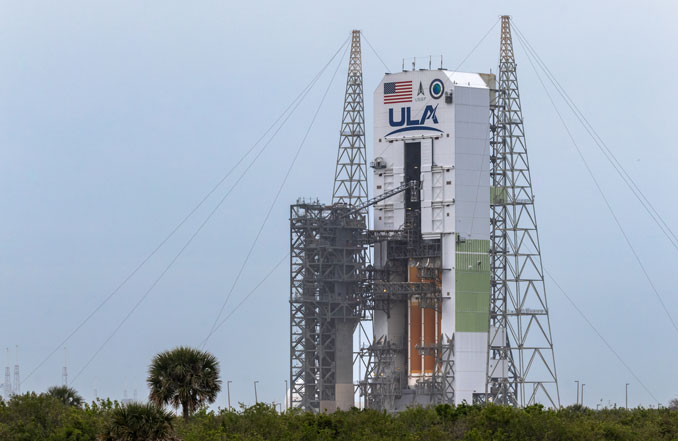
The Legacy of the Delta Rocket Family
This historic occasion marks the culmination of a storied legacy that began in the late 1950s when NASA initiated the Delta rocket program. Over the years, various versions of Delta rockets have been instrumental in launching numerous missions, including eight expeditions to Mars, such as the Spirit and Opportunity rovers. The Delta IV Heavy, standing at 233 feet tall, surpasses the original Delta rocket’s height of just 90 feet. Despite the initial hiccups, the Delta rocket soon established a reputation for successful launches, making it a trusted choice for various missions.
The Delta IV Heavy: A Spectacle of Power
The Delta IV Heavy, with its three side-by-side booster cores and Aerojet Rocketdyne RS-68A engines, provides a combined 2.1 million pounds of thrust at liftoff. The rocket’s unique design features half a million gallons of fuel, which creates a mesmerizing spectacle during launch as the hydrogen propellant ignites, causing flames to race up the rocket body due to the hydrogen fueling process. This has earned the Delta IV Heavy the nickname “the most metal of rockets” among space enthusiasts.
The Final Mission: NROL-70 and Weather Challenges
The final mission for the Delta IV Heavy is the NROL-70 payload, a national security satellite developed by the National Reconnaissance Office (NRO). The mission aims to strengthen the NRO’s ability to provide timely intelligence information to national warfighters and analysts, supporting disaster relief and humanitarian efforts worldwide. As ULA prepares for this significant milestone, weather conditions pose potential challenges. Forecasts predict a 30% chance of favorable launch conditions on Thursday, with concerns about clouds, thunderstorms, and wind in front of and behind a frontal boundary. However, ULA remains optimistic, having backup launch windows through Monday if necessary.