



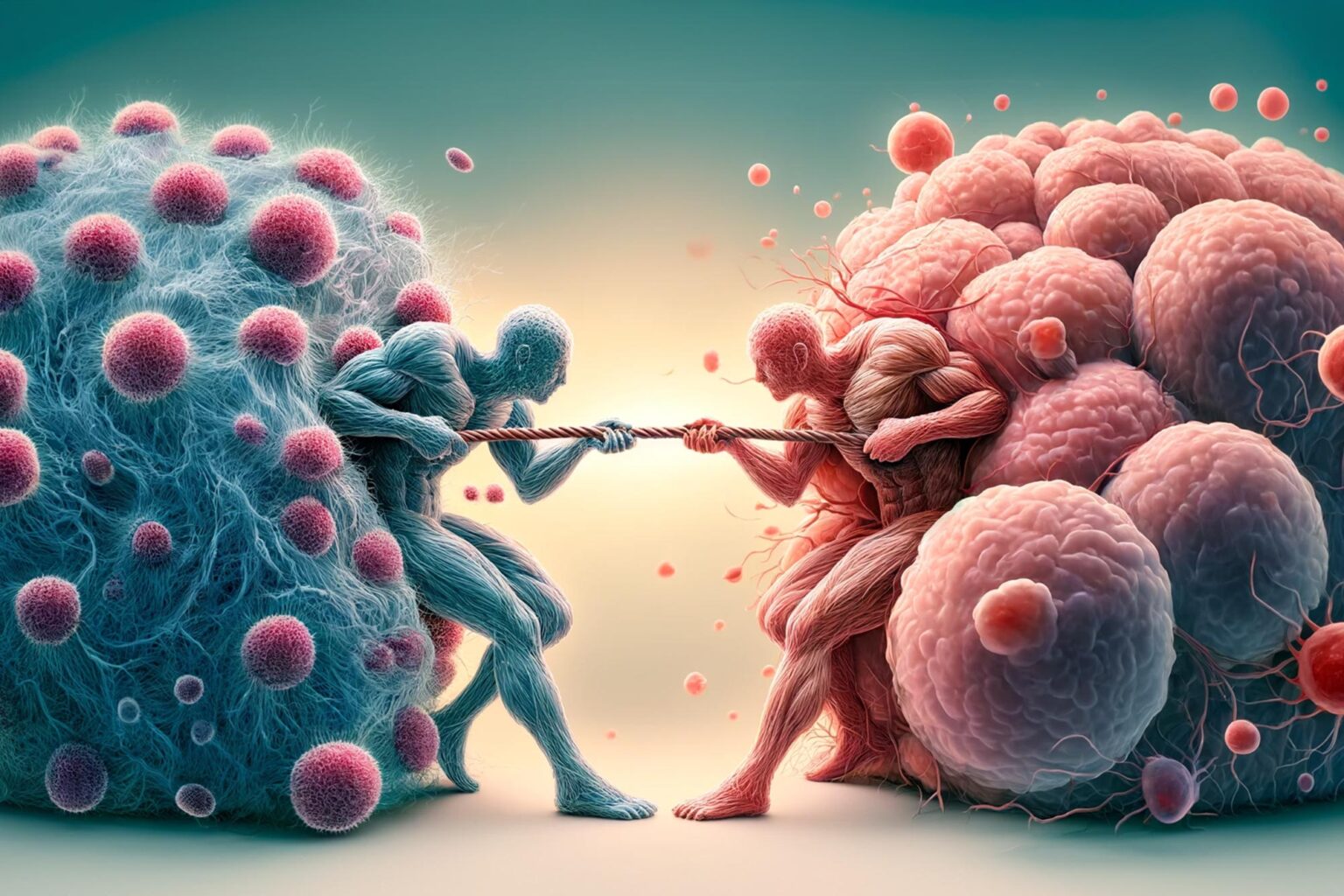
Glutamine metabolism is crucial for cancer cells to proliferate and survive. Tumor cells reprogram their metabolism to increase glutamine uptake and utilization, leading to a reduction in glutamine availability for immune cells. This metabolic reprogramming results in a weakened immune response, allowing cancer cells to evade the immune system and progress.
Immune cells, particularly T cells, also rely on glutamine to function optimally. T cells require glutamine to proliferate, differentiate, and produce cytokines. However, in the tumor microenvironment (TME), T cells often face glutamine deprivation due to the high demand from cancer cells. This glutamine deficiency impairs T cell function and contributes to an ineffective anti-tumor response.
Cancer cells and immune cells engage in a fierce competition for glutamine, an essential amino acid, within the tumor microenvironment (TME). This glutamine tug-of-war plays a pivotal role in cancer progression, immune cell function, and the modulation of the TME.