


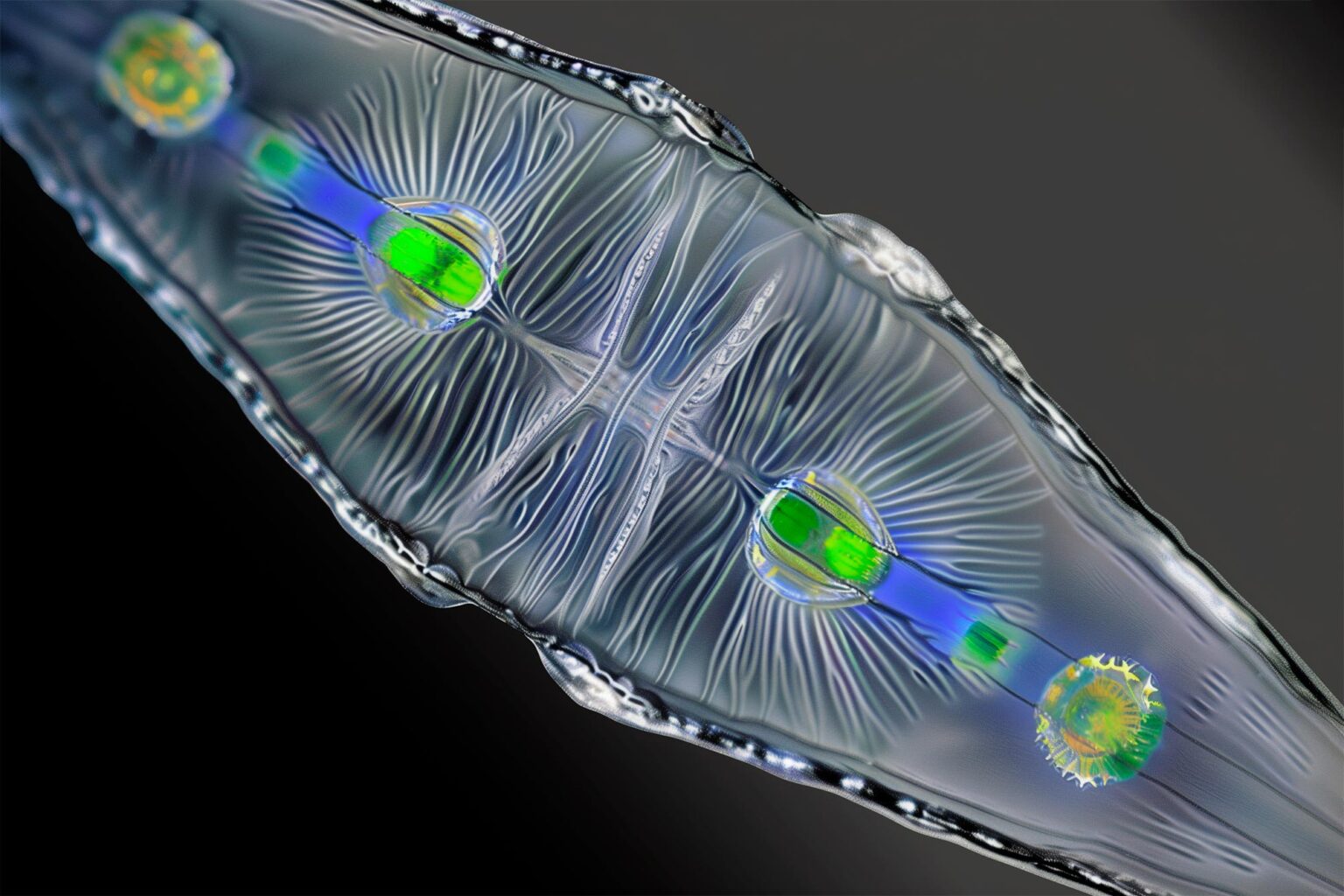
Rhizobia, a type of bacteria, and diatoms, a type of algae, have long been known to form symbiotic relationships in various environments. However, the specifics of their interactions in marine ecosystems have remained elusive.
Nutrient Exchange and Microhabitat Creation
A team of researchers has shed light on this mystery. Their study reveals that the symbiotic relationship between rhizobia and diatoms in marine ecosystems is driven by the exchange of nutrients and the creation of unique microhabitats.
Nutrient Exchange
The researchers found that the rhizobia provide the diatoms with fixed nitrogen, which is essential for their growth and development. In return, the diatoms supply the rhizobia with organic carbon compounds, which the bacteria use as an energy source.
Microhabitat Creation
The study also shows that the symbiotic relationship between rhizobia and diatoms leads to the creation of unique microhabitats within the marine environment. The diatoms provide a physical substrate for the rhizobia to attach and grow, while the rhizobia help to stabilize the diatom communities and create a more favorable microenvironment for their growth.
These findings contribute to a better understanding of the complex and dynamic relationships between different microbial communities in marine ecosystems, and highlight the importance of symbiotic interactions in shaping these environments.