



In the nocturnal realm, bats and insects engage in an auditory battle. Seven major insect groups, including tiger beetles, possess ears sensitive to bat echolocation pitches. In response, these insects often flee or employ various sound-based countermeasures to evade detection.
Researchers Harlan Gough and colleagues, now at the U.S. Fish and Wildlife Service in Burbank, Washington, were intrigued by previous findings suggesting that some tiger beetles produce high-pitched clicks when exposed to bat ultrasound. To understand the purpose behind this behavior, they conducted experiments with 19 tiger beetle species collected from southern Arizona.
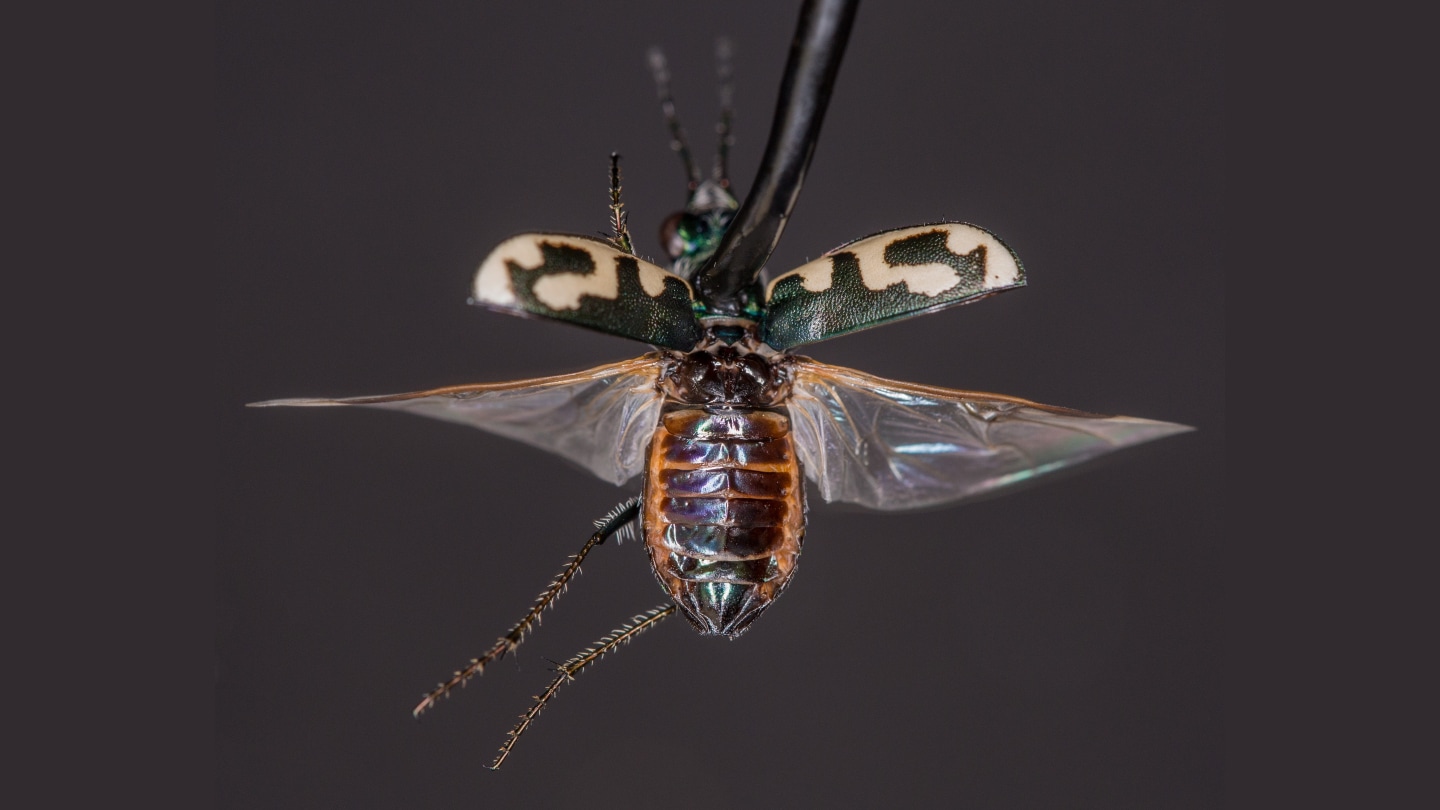
In the lab, the researchers tethered the beetles to a metal rod and played bat clicking sequences to observe their reactions. Seven of the nocturnal species, when hearing the bat echolocation, responded by colliding their hard, case-like forewings with their beating hindwings, producing high-pitched clicking noises.