


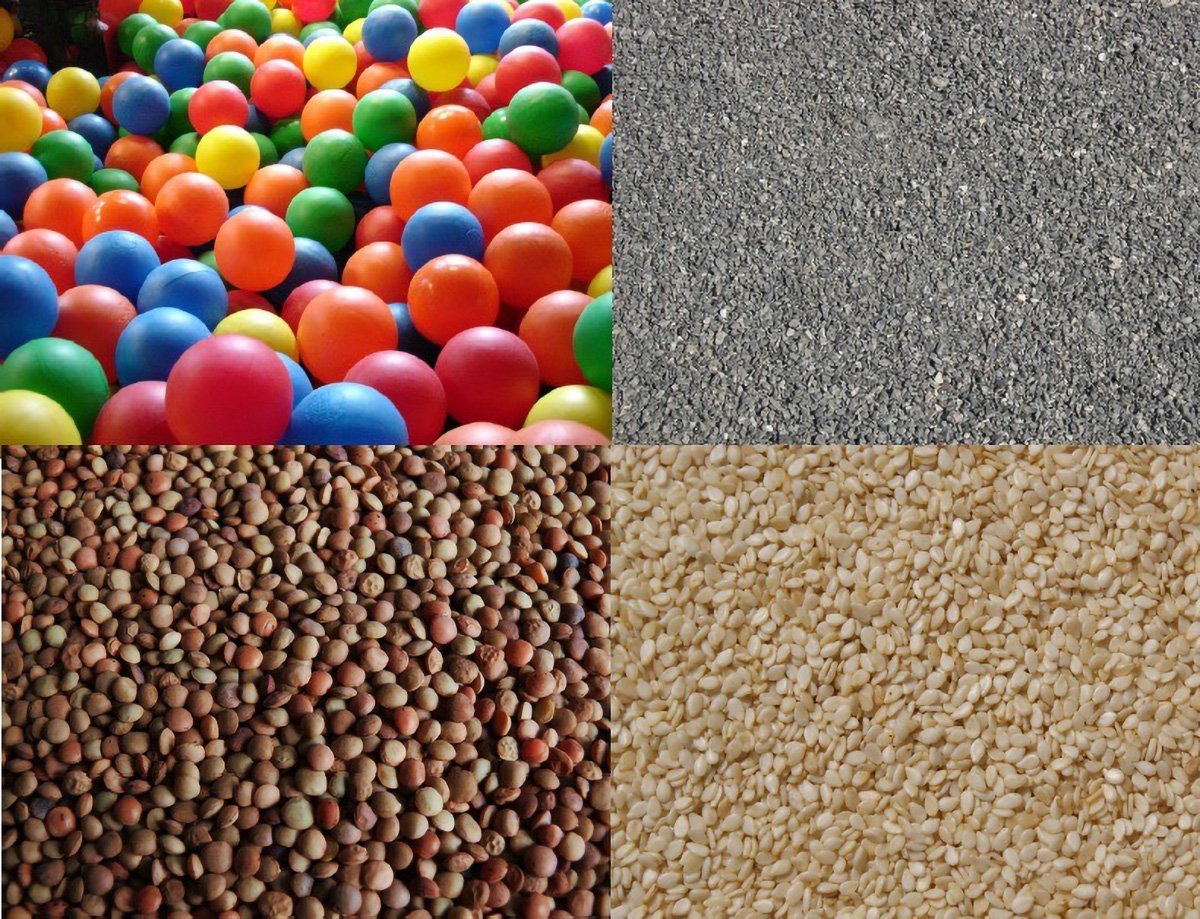
Granular materials, such as soil, sand, flour, and sugar, are ubiquitous in our daily lives. They are part of our infrastructure, and understanding their behavior is crucial for various industries, from agriculture to pharmaceuticals.
A complete understanding of granular materials is relevant to the compaction of granules into pellets to make pills, the processing of grains in agriculture, and predicting behaviors of geophysical matter involved in civil engineering. This research is a significant step forward in understanding the hidden world of granular materials, shedding light on an everyday scientific mystery that has long puzzled scientists and engineers alike.
Granular Materials as Disordered Systems
Granular materials are disordered systems often found in a far-from-equilibrium state, making them “odd balls” of matter that behave differently from solids, liquids, and gases. Despite their familiarity, the thermodynamics of non-equilibrium systems like granular materials are not well-defined, with individual particles having distinct properties and exerting frictional forces on each other.